
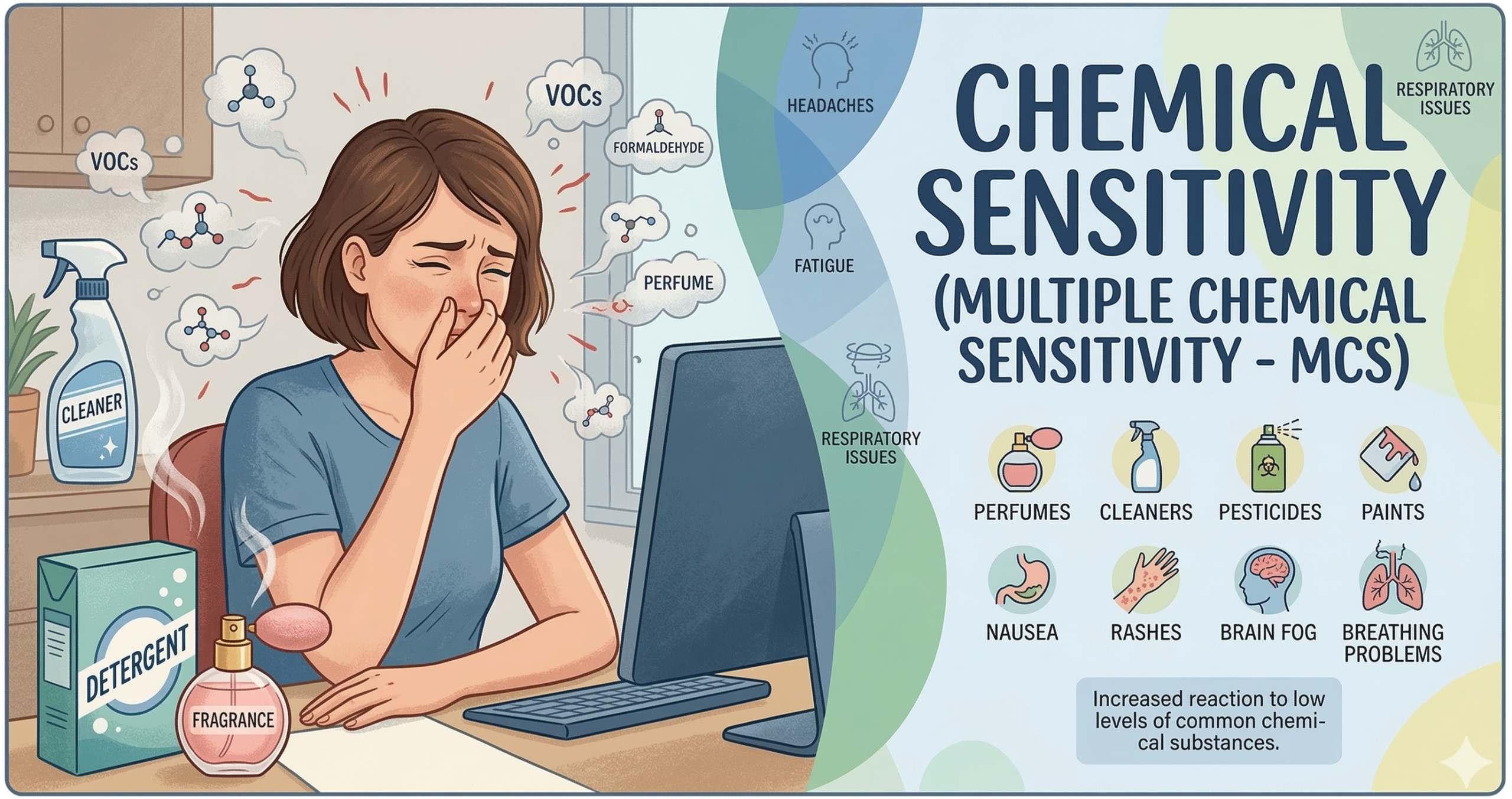
If the smell of perfume gives you headaches, cleaning products make you dizzy, or entering certain buildings triggers a cascade of symptoms — fatigue, cognitive fog, nausea, respiratory symptoms, or skin reactions — you may be experiencing multiple chemical sensitivity (MCS). This is a real, physiologically grounded condition, and while it can be debilitating, it responds to a systematic functional medicine approach.
What Is Multiple Chemical Sensitivity?
Multiple chemical sensitivity is characterized by recurrent symptoms in multiple organ systems that occur in response to low-level chemical exposures that are well-tolerated by most people. Common triggers include fragrances and perfumes, cleaning products and detergents, pesticides, vehicle exhaust, new building materials (off-gassing VOCs), dry cleaning chemicals, and synthetic fabrics.
The underlying mechanisms involve a combination of: impaired hepatic phase I and phase II detoxification (often related to genetic variants like CYP450 polymorphisms and GSTM1 deletions), limbic system sensitization where the brain develops a hypersensitive alarm response to chemical signals, mast cell activation syndrome (MCAS) producing exaggerated inflammatory responses, oxidative stress overwhelming cellular defenses, and in many cases, a prior toxic overload event (chemical spill, pesticide exposure, mold illness, or viral infection) that sensitized the system initially.
Why This Condition Is So Often Dismissed
Multiple chemical sensitivity occupies an uncomfortable space in conventional medicine — symptoms are real and often severe, but standard laboratory tests are frequently normal, and there is no single diagnostic biomarker. This leads some practitioners to attribute the condition to anxiety or somatization, which is both inaccurate and harmful.
The evidence increasingly supports physiological mechanisms — particularly detoxification impairment and limbic sensitization — as the primary drivers. Recognizing and addressing these mechanisms produces real clinical improvement.
How I Approach Multiple Chemical Sensitivity
Addressing MCS requires treating both the body’s detoxification impairment and the neurological sensitization pattern. Here’s my evaluation framework:
- Genetic detoxification profiling: CYP1A2, CYP2D6, CYP2C19, GSTM1, GSTT1, and COMT variants
- Organic acid testing and liver function panels to assess detoxification capacity
- Mast cell activation screening: tryptase, histamine, prostaglandins, and urine methylhistamine
- Oxidative stress and antioxidant status: glutathione, 8-OHdG, and catalase activity
- Total toxic load assessment and elimination strategy — reducing background burden improves chemical tolerance
- Targeted liver detoxification support: glutathione, NAC, sulforaphane, milk thistle, and B vitamins
- Limbic system retraining programs (DNRS, Gupta Programme) as adjunctive neurological treatment
Ready to Take the Next Step? Chemical sensitivity doesn’t have to control your life. With the right investigation and targeted support, many patients significantly expand their tolerance and regain freedom. Book a consultation at drjamieahn.com and let’s build your path back. Book Your Consultation: www.drjamieahn.com |
